Zero-Click Search in 2026: Why Traffic Drops and How to Win It Back
Zero-click search is cutting website traffic in 2026 as AI Overviews answer questions first. Learn what is happening and how to win clicks back.
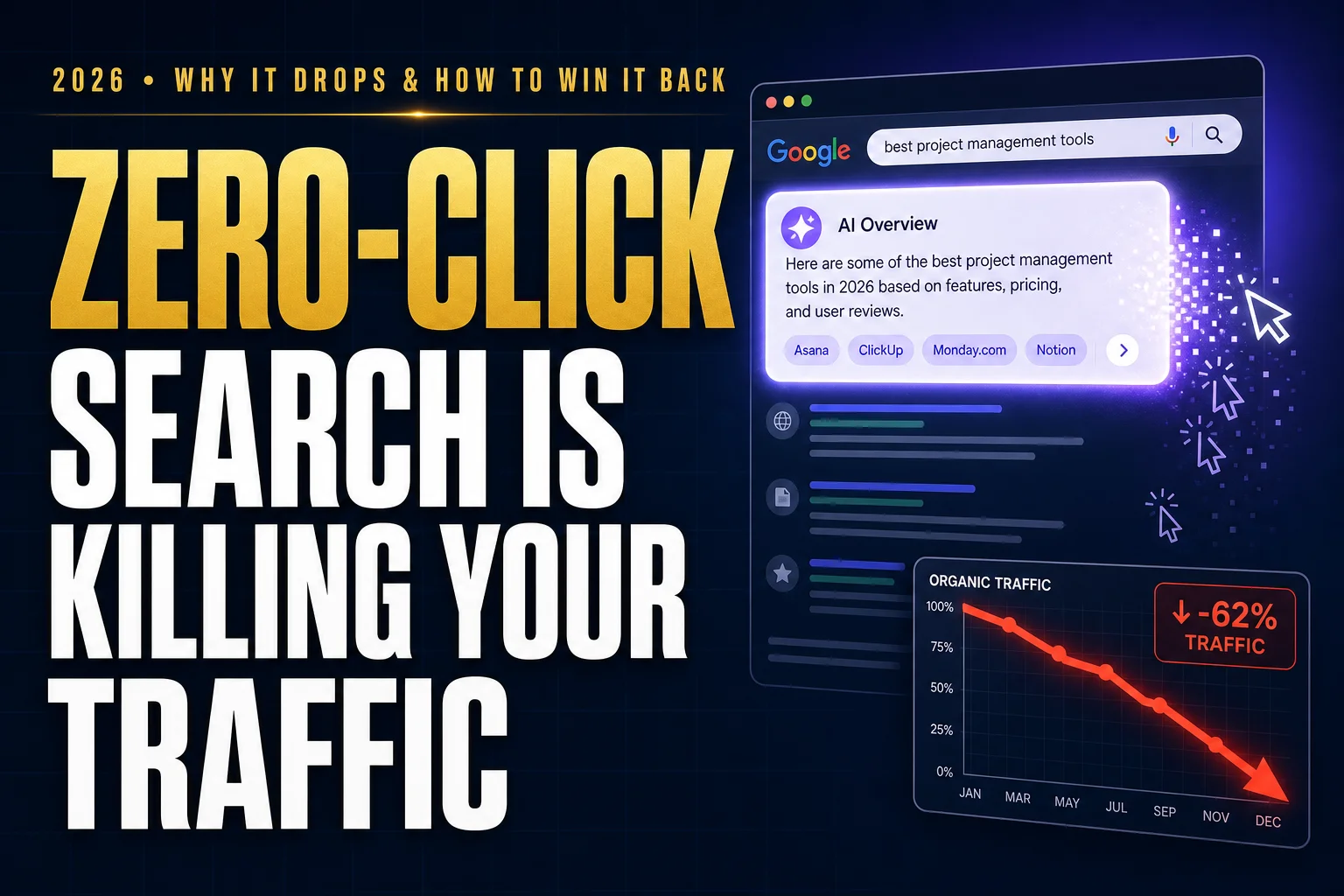
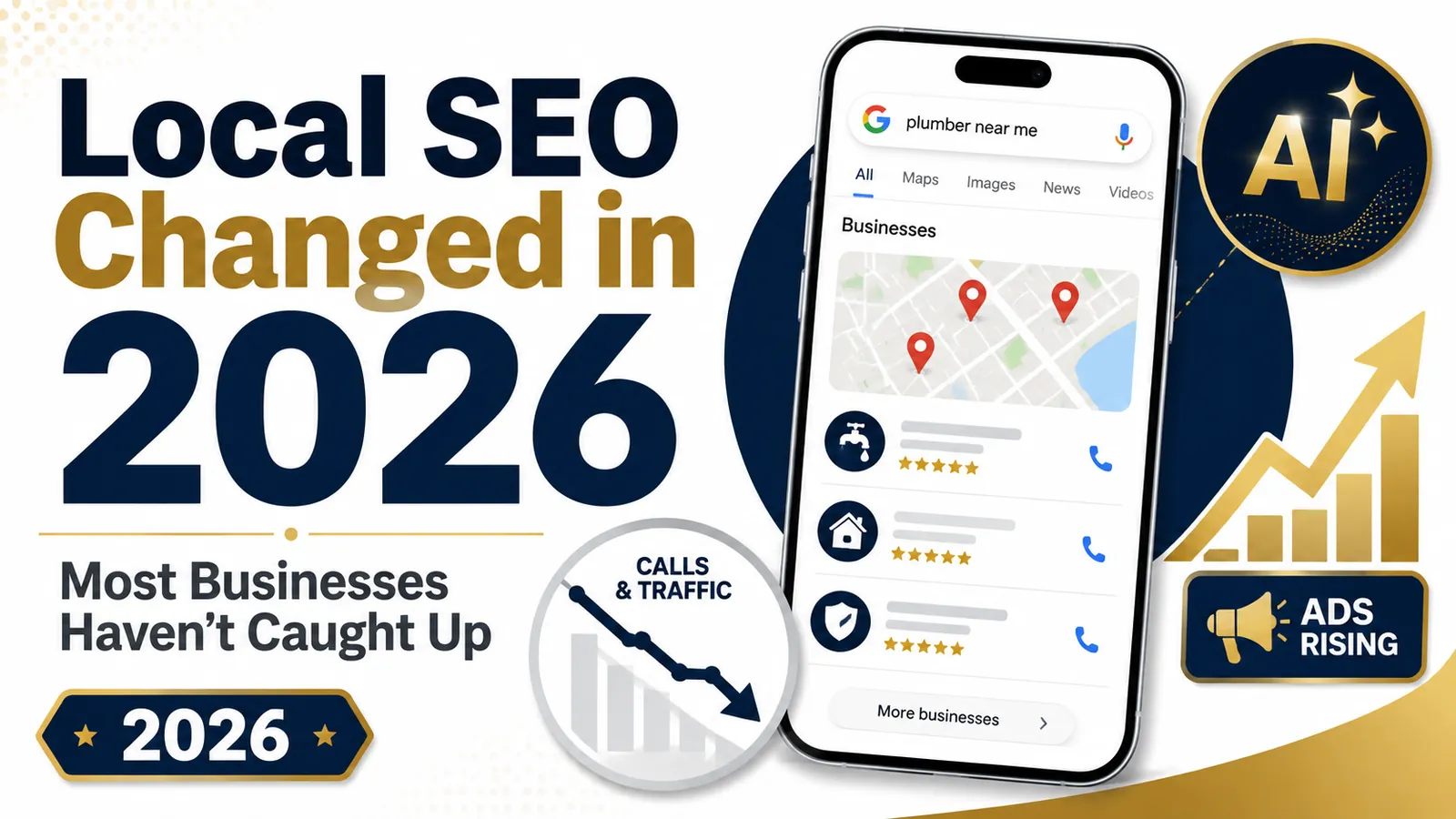
If your website traffic slid this summer and you cannot find a broken page to blame, the cause is probably not on your site at all. It is on the search results page. Google now answers many questions directly with an AI summary, so the customer gets what they need without ever clicking through to a business. This pattern has a name: zero-click search.
The pressure went public in July 2026. Google added new source links and subscription labels to AI Overviews right after a Penske Media antitrust filing cited a 58 percent decline in publisher click-throughs, as reported by The Next Web. Around the same week, Google faced its first major publisher lawsuit over AI Overviews. If you sell to local customers, this is not an abstract fight between big media companies. It changes how people find you.
Key takeaways
- Zero-click search means a customer gets their answer on the results page, so fewer people click through to your website.
- The damage is real but uneven. Google still sends most web referral traffic, and informational queries are hit hardest.
- Your customers are also asking AI chatbots directly, and ChatGPT dominates that traffic.
- The fix is not a trick. Answer questions clearly, publish original information, keep pages fresh, and earn citations.
- Blocking or suing the AI platforms is a fight for large publishers. Small businesses win by adapting.
What is zero-click search, and why is it spiking in 2026?
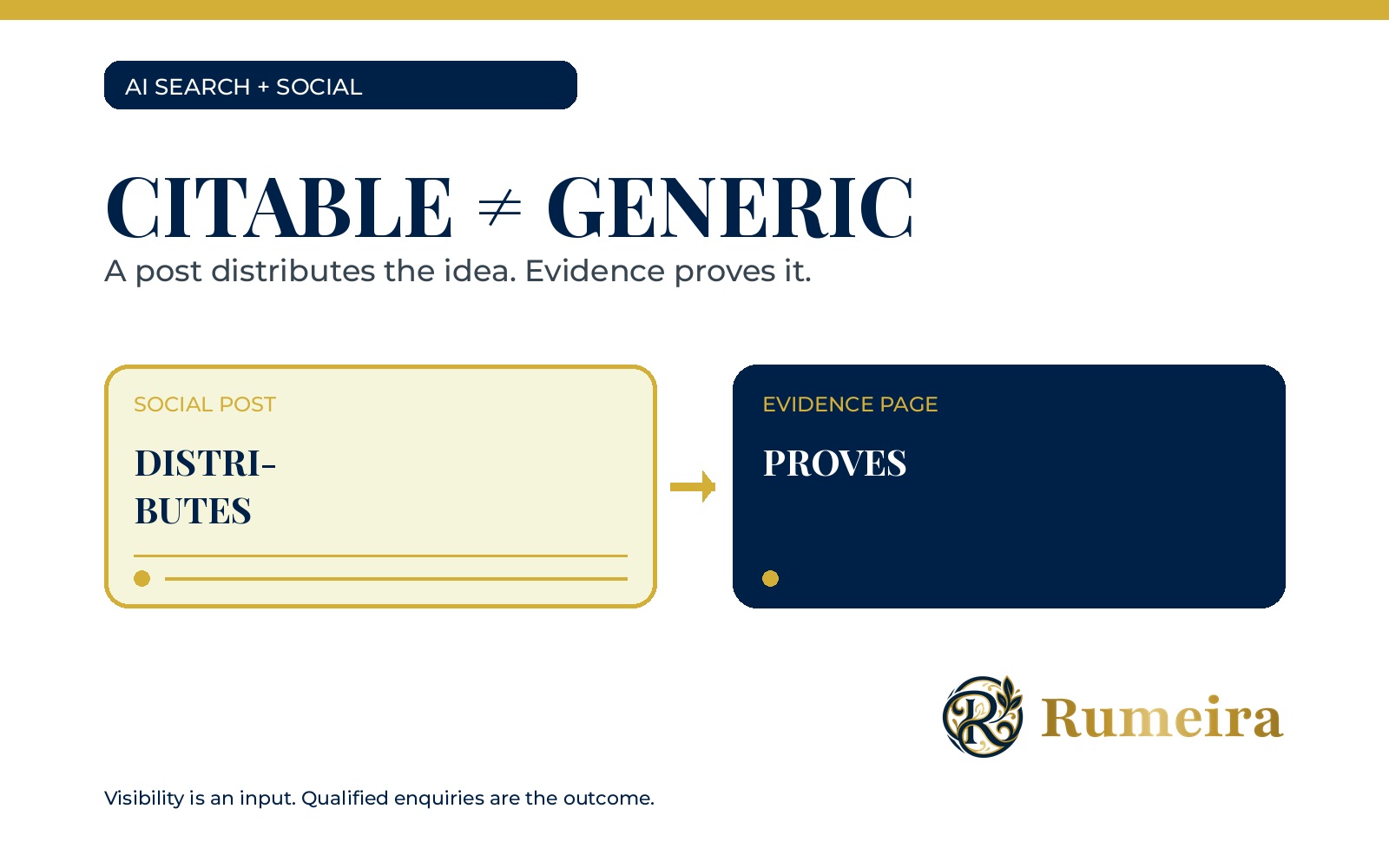
Zero-click search is any search that ends without the person clicking a link to another website. They read the answer in an AI summary or a featured box and move on. It matters now because Google puts an AI Overview at the top of more results than ever, so the answer sits above your listing.
The click math is stark. When Google shows an AI summary, only about 8 percent of those searches lead to a click on a regular result, compared with about 15 percent when no summary appears, according to Pew Research Center data reported by Quartz. Only about 1 percent of searches lead to a click on a link inside the summary itself. In plain terms, the summary satisfies the reader, and your listing gets skipped.
Two forces pushed this over the edge in 2026. Google expanded AI Mode, its fully conversational search, to more than 180 countries and gave it agentic features like booking local services, per Google’s own announcement. Practitioners on Hacker News argued the change removes some of the last clicks from the open web. When the search engine can call a business for you, the click was never needed.
Is Google really sending less traffic, or is this overblown?
Traditional search is bruised, not dethroned. Google still originates the large majority of web referrals and holds roughly 80 percent of global query volume, so writing it off would be a mistake. The honest read is that the loss is concentrated in certain query types, not spread evenly across every page you own.
One July 2026 analysis put Google at about 87.6 percent of all web referrals, with AI platforms taking an estimated 15 to 20 percent of informational queries, according to Technology Checker. That split tells you where the pain lands. Pages that answer a quick factual question (“what time do you open,” “how much does a filling cost”) are the most exposed, because an AI summary can repeat that answer in one line. Pages that require judgment, comparison, or a local decision still send people to your site.
News publishers are treating the decline as structural, not a blip. A Reuters Institute report says they expect a 43 percent drop in search referrals by 2029 and are shifting budget toward AI-focused optimization, as covered by Search Engine Land. You do not have to accept that forecast for your own business, but you should plan as if easy informational traffic keeps shrinking.
Where are your customers actually going?
Your customers are splitting their attention between Google and AI chatbots, and among the chatbots, one name dominates. ChatGPT accounts for the majority of generative-AI chatbot visits, which means a growing share of “research” now happens inside a chat window before anyone opens a browser tab.
ChatGPT held about 53.9 percent of generative-AI chatbot web visits in July 2026, ahead of Gemini at 27.9 percent and Claude at 9.2 percent, according to tracking from Momentic. A separate roundup noted that Claude quietly passed Perplexity in March 2026, and that Perplexity sits well below its earlier peak, per Adapt Worldwide. The takeaway for a local business is simple: being invisible in these tools is now the same problem as being invisible on page two of Google.
In our own work with local service businesses, we see this split show up in the referral data. The clients who appear inside ChatGPT and Google’s AI answers hold a steady flow of qualified visits, while the ones who do not lean entirely on a shrinking pool of classic clicks. We walk through how to earn that visibility in our guide to getting found in AI search.
What actually works to earn clicks and citations now?
The winning approach is not a secret AI trick. It is strong classic marketing aimed at being the clearest, most trustworthy answer on a topic. Practitioners agree that AI features still lean on search fundamentals, so optimizing for Google and for AI answers is one job, not two, as explained in this EMARKETER FAQ on GEO and AEO.
What gets cited is also measurable. An analysis of more than 10,000 AI queries found that original research is quoted as a primary source about 4 times as often as aggregated content, and that resource hubs earn about 3.2 times more citations than product-only pages, per this dev.to write-up. If you want to be the source an AI names, publish things only your business can know.
Here is how to put that into practice.
Answer the real question first
Open every important page with a direct, complete answer in the first two sentences, then add the detail. AI systems pull their summaries from clear opening passages, so a page that buries the answer three paragraphs down rarely gets quoted. Write the way a helpful person would reply if a customer asked out loud.
Build a resource hub, not just product pages
Group your best guides, comparisons, and how-tos around one core topic and link them together. Hubs earn far more citations than a lone sales page because they signal depth on a subject. For a local service business, that might be a cluster of pages covering pricing, common problems, and what to expect during a visit.
Publish something only you know
Original numbers, before-and-after examples, and firsthand experience are what AI tools reach for when they name a source. A short post with your own data, such as average project timelines or a real case from your service area, is more citable than a generic overview that repeats what everyone else says.
Keep pages fresh and dated
Recency is a ranking lever on AI surfaces, and some tools favor content updated within the last 30 days, as noted in this dev.to guide to AI search visibility. Put a visible “last updated” date on cornerstone pages and revisit them on a schedule. A page that has not changed in two years reads as stale to both Google and AI models. If updating pages by hand keeps slipping, the same approach we describe in our guide to AI workflow automation can put these refreshes on a fixed cadence.
Optimize per surface, and track the right metrics
Different tools cite different places, so a single tactic will not cover all of them. The same guide notes that ChatGPT leans heavily on Wikipedia while other tools favor community sources like Reddit, and that only a small share of domains get cited across both. Rather than chasing perfect attribution, track your share of voice and how often you are cited, then tie that to real business growth, as recommended in Search Engine Land’s rundown of GEO metrics.
Should you block or sue the AI platforms?
For a small or local business, the answer is almost always no. Blocking crawlers or filing complaints is a strategy for large publishers whose whole business is web traffic, and even they are getting mixed results. Cutting off the tools your customers use to find you would trade a traffic problem for an invisibility problem.
The current standoff shows why this is a giant’s game. Reddit was reported to be weighing tighter limits on Google’s access to its content as a licensing deal neared expiry, a move tied to a broader content-owner revolt over vanishing traffic. That kind of leverage depends on owning content the platforms cannot easily replace. A local business does not have that leverage, and it does not need it. Your advantage is being genuinely useful to the people in your area, which no lawsuit can manufacture.
Frequently asked questions
Does zero-click search mean SEO is dead?
No. It means the goal is shifting from “rank and get a click” toward “be the answer and earn the click that matters.” The fundamentals, clear content, trust signals, and a fast site, still decide whether Google and AI tools use your pages.
How do I know if AI Overviews are costing me traffic?
Compare clicks and impressions for your informational pages over the past year in Google Search Console. If impressions hold steady while clicks fall, an AI summary is likely answering the question above your listing.
What is the single most useful thing to do this month?
Pick your three most important pages, rewrite each opening to answer the main question in the first two sentences, add a real example or number only your business can provide, and stamp the update date. That one pass improves both search and AI visibility.
What to do next
Zero-click search is not the end of your website, but it is the end of coasting on easy informational traffic. The businesses that hold their ground in 2026 are the ones that answer questions clearly, publish something only they can offer, and keep their best pages current. Treat search and AI answers as one audience with one need: a trustworthy, specific answer.
If you want help turning your best pages into the answer that Google and AI tools cite, that is what we do every day. Start with your three most important pages this week, then build from there.
About the author: This guide was written by the search and content team at Rumeira, which helps local businesses stay visible in both Google and AI answers. Have a question about your own pages? Talk to our team.