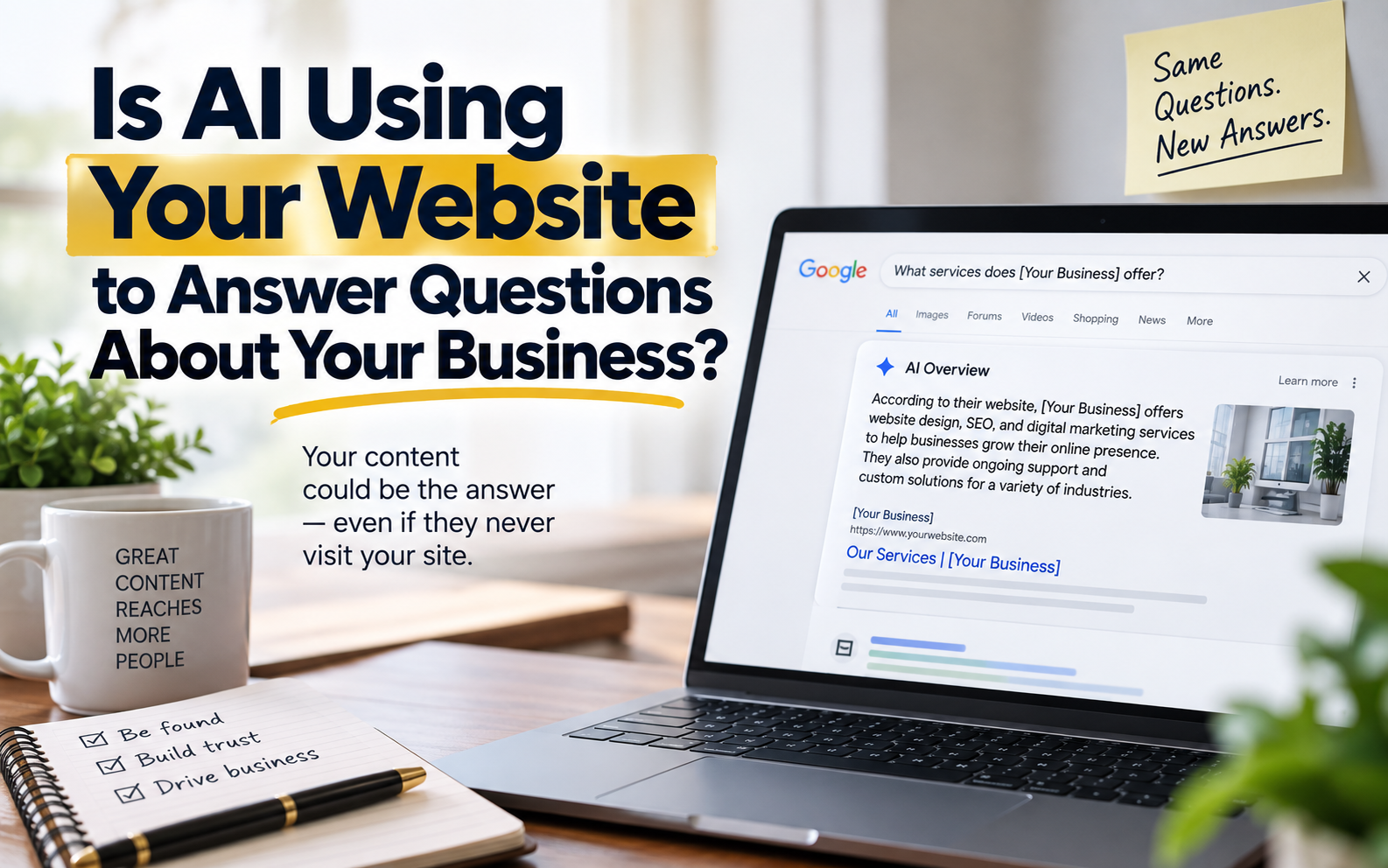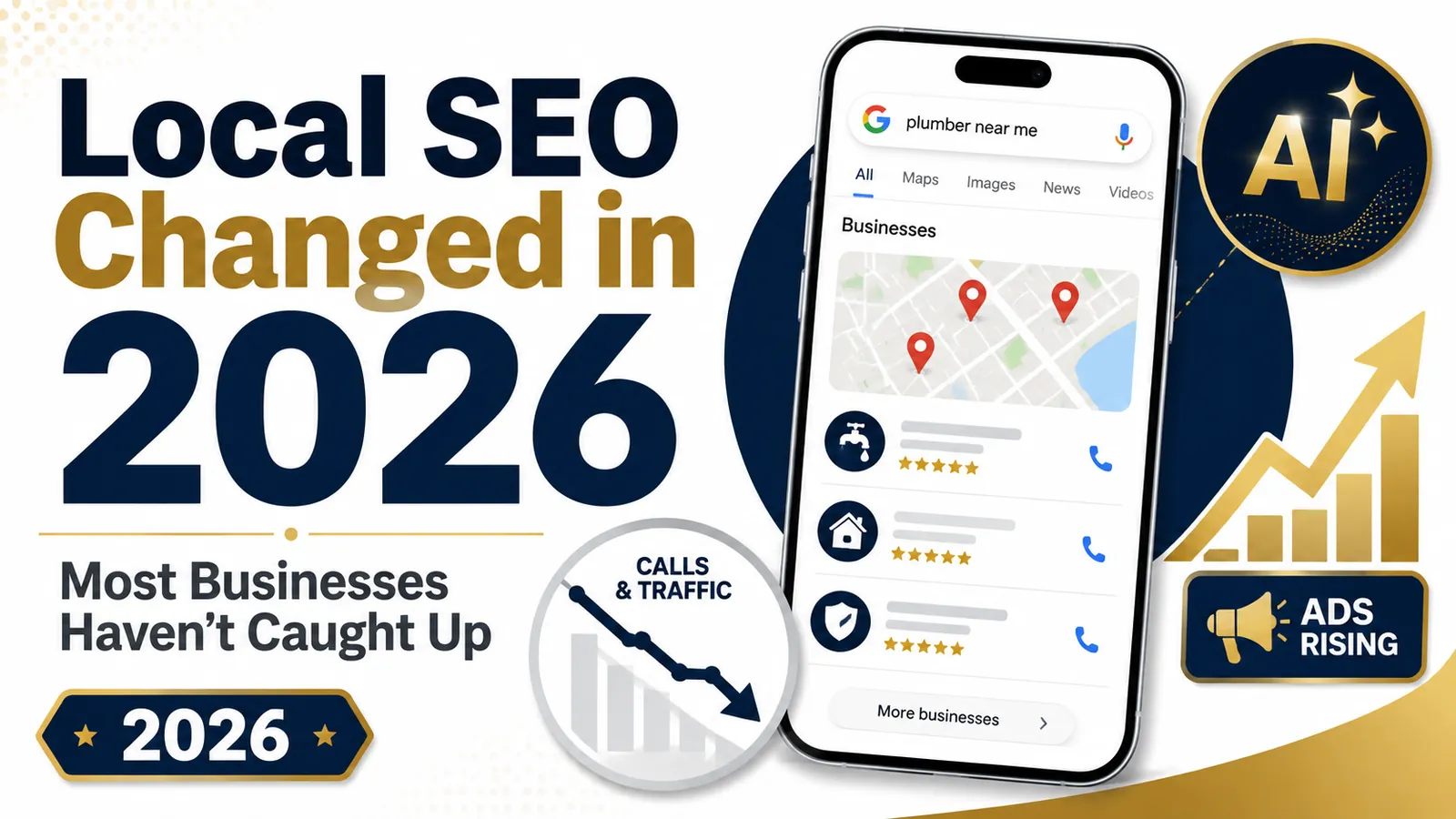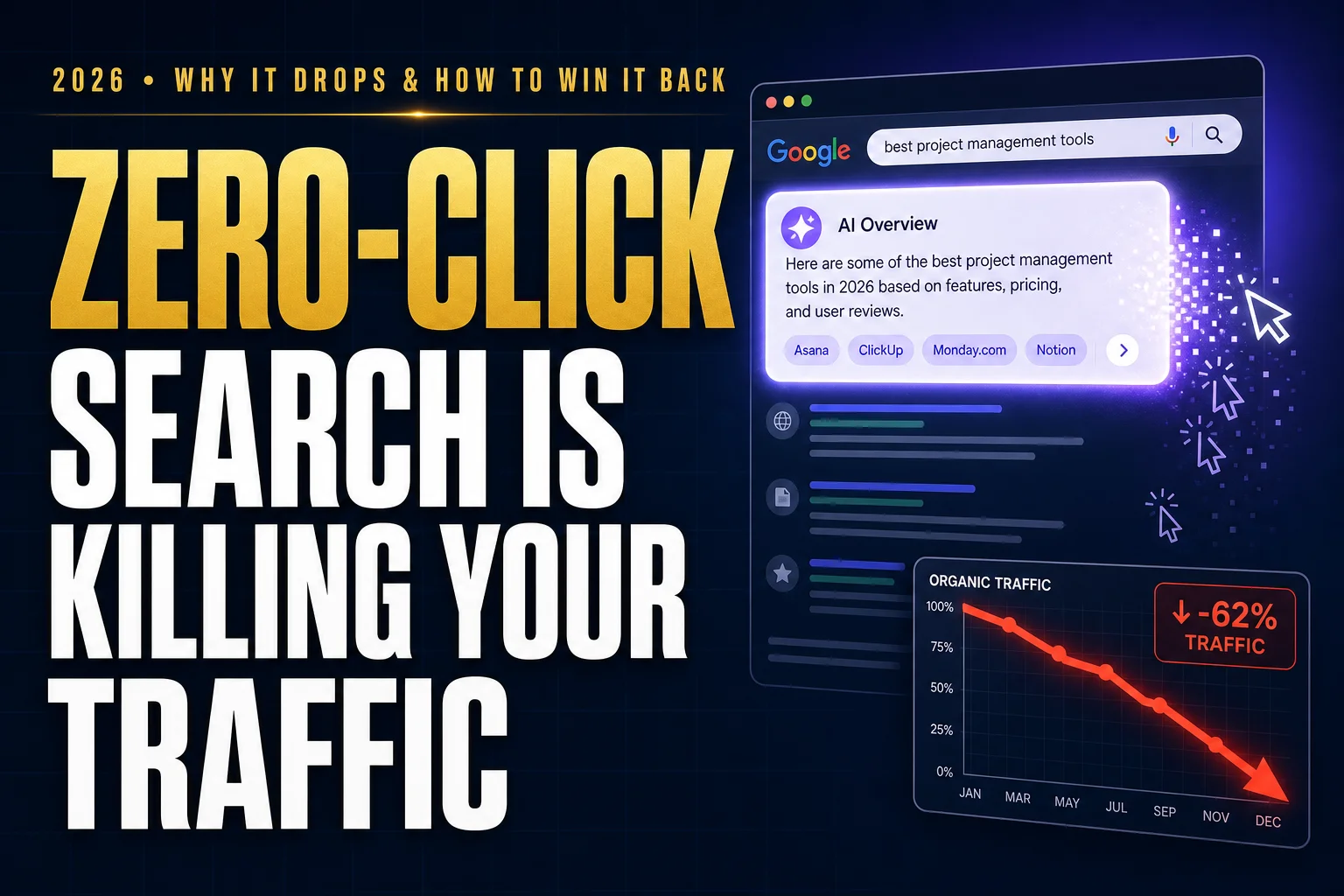
AI Search Can Cite Your Social Posts—But Generic Content Still Loses
Social posts can surface in AI answers, but clarity without original evidence is replaceable. Build a content system that earns trust and enquiries.
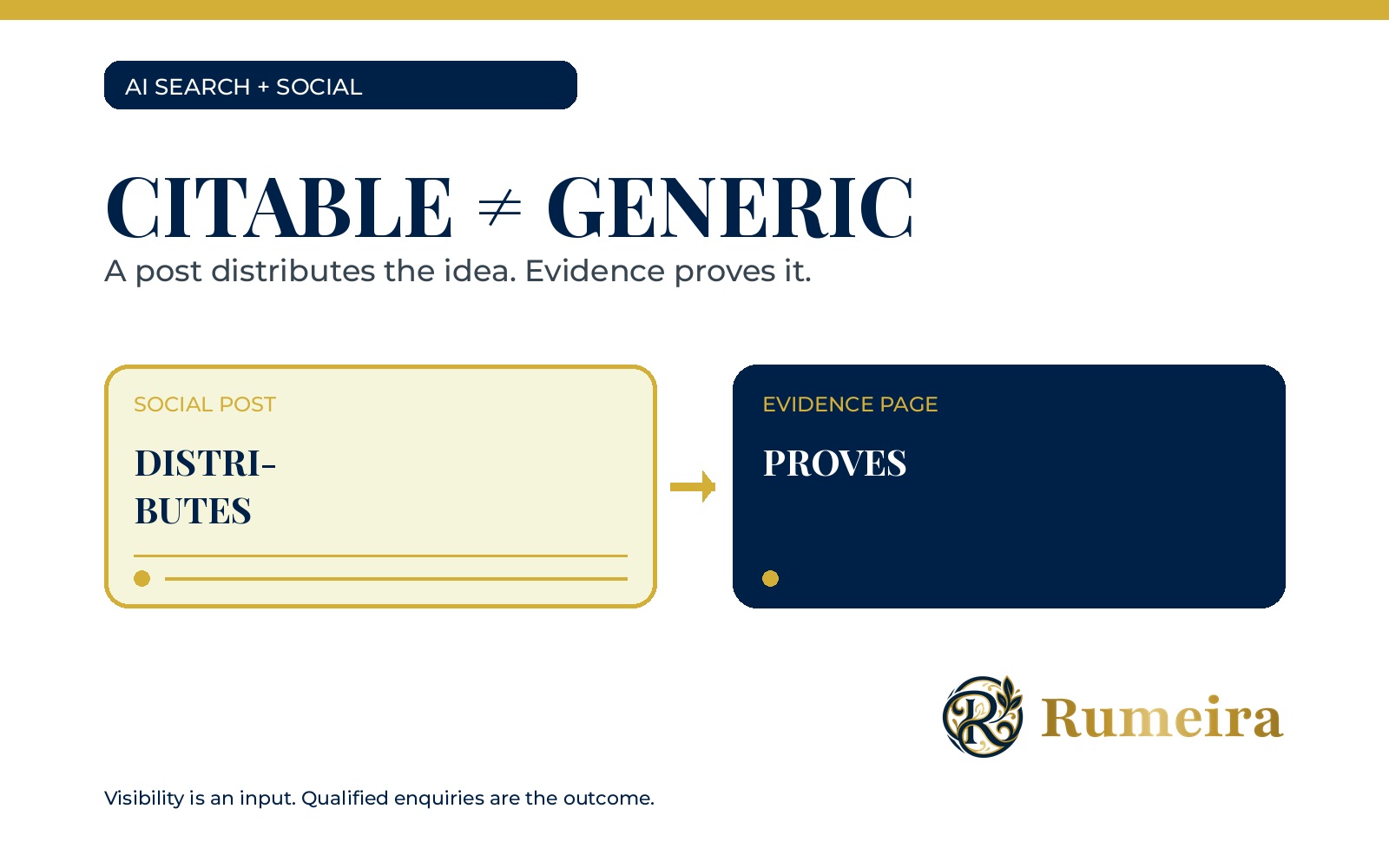
Social posts are becoming part of the material AI search systems can retrieve. That does not mean every polished company update becomes a recommendation.
The more useful distinction is this:
- A social post can distribute an idea.
- A strong article, service page or study can prove it.
- A consistent set of accurate sources can help an AI system understand the brand behind it.
- None of that guarantees a qualified enquiry.
For service businesses and growing brands, the opportunity is real. So is the risk of filling every channel with interchangeable content that sounds clear but says nothing only your business could say.
Summary
AI search can surface public social content, including LinkedIn posts and articles. Research published by Semrush with LinkedIn found meaningful citation activity, especially for original, educational content. At the same time, LinkedIn is actively reducing the reach of content it classifies as “AI slop.”
Rumeira’s view is that these are not conflicting signals. They point to the same operating rule: use social posts to carry useful, evidence-backed ideas—not to manufacture volume.
A practical content system should connect customer questions, original website evidence, clear social distribution and conversion measurement. Visibility is an input. Qualified enquiries and booked conversations remain the business outcome.
What changed
Three developments have made this question more urgent.
First, AI-assisted search is now used at substantial scale. In a May 2026 product announcement, Google said AI Mode had surpassed one billion monthly users and that its query volume had more than doubled every quarter since launch. Google did not publish the underlying measurement method or country split, so these figures are best treated as Google-reported global product metrics—not a forecast for every market or business. Google, May 2026
Second, public social content is appearing in cited answers. Semrush analysed 325,000 prompts during January and February 2026 across ChatGPT Search, Google AI Mode and Perplexity, spanning 12 industry categories. It identified 89,000 unique LinkedIn URLs cited in responses. In that dataset, LinkedIn appeared in an average of 11% of AI responses, ranging from 5.3% in Perplexity to 14.3% in ChatGPT Search. This was a vendor study of selected prompts and platforms, not a census of all AI searches. Semrush methodology, March 2026
Third, platforms are pushing back on low-value automation. LinkedIn’s chief product officer reported in August 2026 that more than one million people had used its “seems like AI slop” feedback control and that members were seeing 40% fewer views on content LinkedIn classified that way. LinkedIn did not publish the population, geography or detailed classifier methodology, so those figures show platform direction rather than a universal performance benchmark. Hari Srinivasan on LinkedIn, August 2026
Where the conversation agrees
Across platform guidance, vendor research and accessible professional discussion, three recurring ideas appear.
Clear answers are easier to retrieve
Google’s current guidance for generative AI features returns to familiar SEO foundations: valuable, distinctive content; accessible pages; accurate structured information where appropriate; and useful media. It explicitly frames SEO best practices as foundational rather than obsolete. Google Search Central, May 15, 2026
LinkedIn’s guidance similarly recommends clear headers, answer blocks, consistent language and leading each post with its main point.
That advice is sensible for humans too. A buyer should not need to decode what a post is about.
Originality matters more than repackaging
In the Semrush dataset, approximately 95% of cited LinkedIn posts were original posts, while reshares made up about 5%. The study also found that educational or advice-led material represented 54% to 64% of cited posts, depending on the model.
Those numbers do not prove that originality causes citation. The sample contained URLs that were already cited, so it describes the cited set rather than every post published on LinkedIn. Still, it supports a practical editorial choice: add evidence, a useful framework or a specific answer rather than repeating the same announcement.
A post and a website page do different jobs
Social content can expose an idea to people and retrieval systems. A website gives the business more control over depth, internal links, updates, conversion paths and measurement.
Treating those formats as substitutes creates two weak outcomes: thin social posts that cannot support a claim, or isolated articles that nobody distributes.
Where the conversation disagrees
The strongest disagreement is about how much weight social content deserves in an AI-search plan.
LinkedIn’s August 2026 guidance describes LinkedIn as a leading lever for professional AI-search visibility. That claim is informed by platform and partner research, but LinkedIn also benefits commercially when businesses publish more often.
Google’s guidance is broader. It emphasizes useful, unique web content and established search fundamentals rather than prescribing a social-first playbook.
Comments on the linked August LinkedIn post raise another concern: some people welcome controls against repetitive AI-written posts, while others worry that polished writing, translation or accessibility support could be mistaken for low-quality automation. The useful distinction is not simply “AI-written” versus “human-written.” It is whether the content contains accountable, original value.
There is also an unresolved measurement problem. A citation or brand mention may help discovery, but it is not evidence that the reader became a qualified lead. AI platforms, prompts, locations and answers change. Attribution is often incomplete.
The Rumeira perspective: build an evidence-to-enquiry system
Rumeira supports using AI to improve research, production and consistency. The automation should not become the source of the opinion or the proof.
A stronger workflow has four connected layers.
1. Start with a real customer question
Pull questions from enquiry forms, sales conversations, support tickets, search queries and review themes. Remove private information, then group questions by buying stage.
Choose one question specific enough to answer properly. “How should a local service business respond when AI search describes its service area incorrectly?” is more useful than “What is AI search?”
2. Publish the proof where you control it
Create or improve a page that can carry the complete answer:
- define the problem plainly;
- state what changed and when;
- show the evidence and its limits;
- explain the decision or method;
- include original examples where the business has permission to share them;
- identify the author or accountable team;
- link to relevant service and contact pages;
- keep important facts current.
This page becomes the canonical version. It should earn its place even if no AI system ever cites it.
3. Adapt the idea for each social destination
Do not paste the article into every channel.
A LinkedIn company post can explain the business implication. Facebook can make the advice more conversational. Instagram can turn the method into a compact visual sequence. A Google Business Profile update should focus on a relevant local customer need. X should carry one clear point.
Each version should remain accurate without the article. If the article is live, link to it where the destination and context make sense.
4. Measure the path to a qualified outcome
Track three levels separately:
- Visibility: indexed pages, relevant impressions, citations or mentions across a documented prompt set.
- Engagement: useful clicks, saves, replies, profile actions and return visits.
- Business outcomes: qualified enquiries, booked strategy calls, opportunities and revenue recorded through an agreed process.
Do not collapse them into one “AI visibility score.” A mention can be interesting without being commercially useful. A smaller number of relevant visits can outperform a large volume of low-intent attention.
A practical monthly check
For each priority service, choose five to ten questions a serious buyer might ask. Record the exact prompt, platform, location, login state and date. Capture whether the answer:
- names the business accurately;
- cites the correct page;
- represents the service and geography correctly;
- includes a clear next step;
- changes materially across repeated checks.
Then compare the result with real website and CRM evidence. The sample will not represent every AI answer, but a consistent method can reveal changes without pretending to measure the entire market.
What to do next
If your content calendar is full but your evidence is thin, pause one routine post and improve the page behind it.
Add a dated source. Clarify the answer. Replace a generic claim with a real method. Connect the page to the service and enquiry path. Then distribute the useful idea in native social formats.
That is a better use of AI-assisted content production: not more words, but a more reliable route from customer question to credible answer to qualified conversation.
If you want help turning your website, search visibility and content workflow into a conversion-focused system, book a strategy conversation with Rumeira.
Sources and research limits
Research was conducted on September 14, 2026, using accessible public web results and platform pages. No material first-party product announcement was identified in the most recent 24-hour window. The linked public discussion and original platform research predate the seven-day window; they provide background rather than evidence of a new trend this week.
Accessible sources included Google Search Central, Google’s Search product blog, LinkedIn marketing guidance, Semrush’s original study and public LinkedIn posts. Instagram, Facebook, TikTok, YouTube, X, Threads and Pinterest did not expose a reliable, non-personalized complete discussion sample through the available research access. Their absence is an access limitation, not evidence that no discussion occurred. Engagement counts and visible comments were not treated as consensus.