Local SEO Changed in 2026. Most Businesses Haven’t Caught Up.
AI local packs, fewer call buttons, and more ads changed local search in 2026. Here is what the data shows and where businesses should focus next.
SEO isn’t dying, but the way people discover local businesses is changing fast.
Several major shifts accelerated throughout 2025, including AI-powered search results, fewer call buttons, more ads, and declining organic traffic. If your marketing strategy still looks the same as it did two years ago, 2026 is a good time to rethink it.
Key Takeaways
- Google Business Profiles are generating fewer click-to-call actions, even when rankings remain strong.
- Informational blog traffic has declined as Google answers more questions directly in search.
- ChatGPT traffic is growing, but Google still sends far more website traffic.
- Google’s AI-powered local results show fewer businesses than traditional 3-packs.
- Call buttons are becoming less common in some mobile search results.
- Local Services Ads and local pack ads are appearing much more frequently.
- Local SEO is becoming more competitive and increasingly pay-to-play.
- Businesses should diversify into paid search, social media, original content, multiple locations, and AI visibility.
Google Business Profiles Are Driving Fewer Calls
We’ve been seeing this trend throughout the year. Businesses can maintain strong Google Business Profile rankings while still receiving fewer calls.
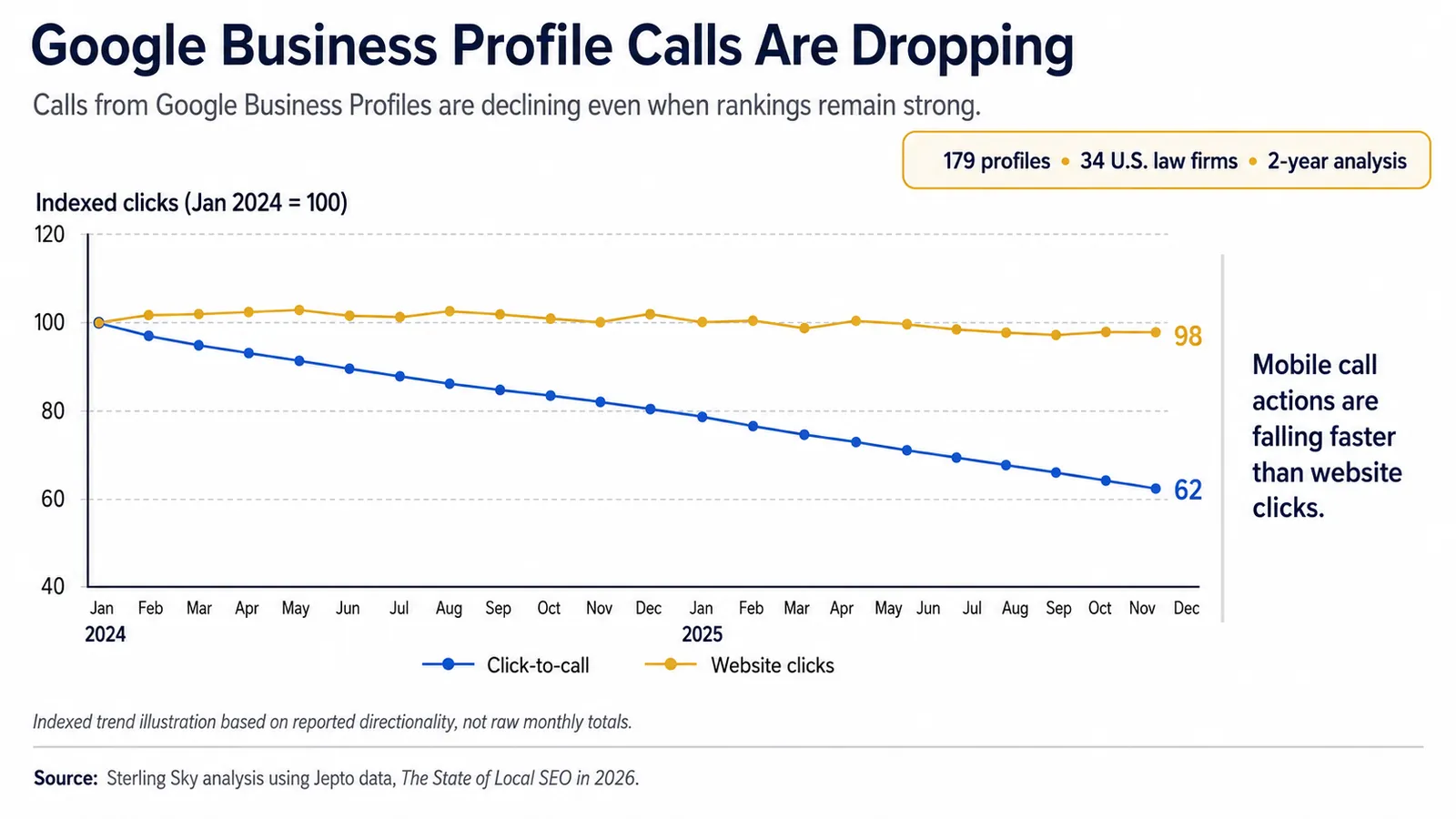
To quantify the change, Dale from Jepto analyzed 179 Google Business Profiles across 34 U.S. law firms over two years.
The pattern was clear: clicks-to-call declined over time.
Website clicks from Business Profiles did not experience the same decline. This suggests the biggest impact is happening on mobile, where phone buttons traditionally generate a large share of local conversions.
Organic Website Traffic Is Shrinking
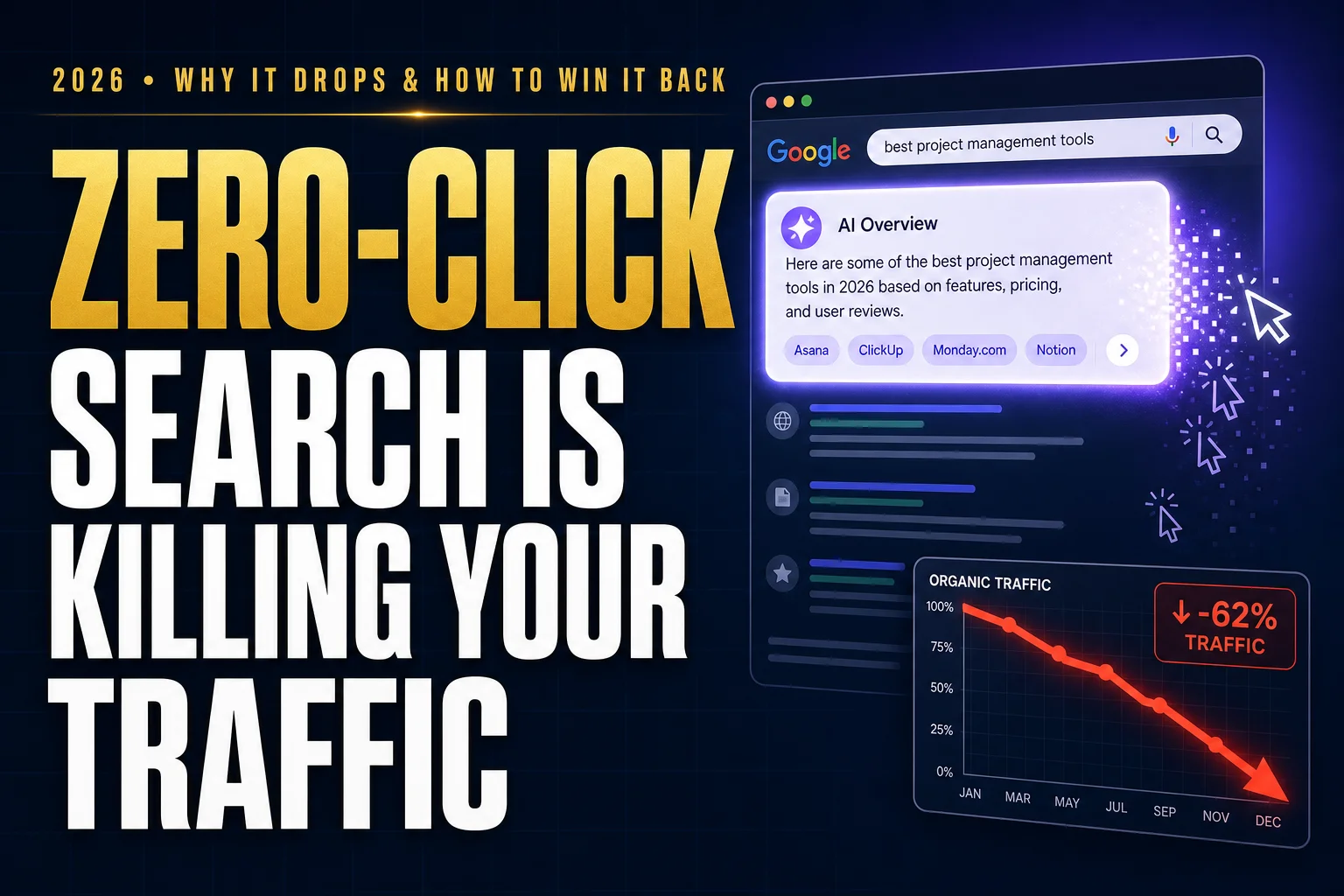
Many businesses that invested heavily in blog posts and informational content saw major traffic declines throughout 2025.
This traffic may not always produce leads directly, but informational content still supports service pages, topical authority, internal linking, and overall search visibility.
So where is that traffic going?
ChatGPT Isn’t Taking Most of Google’s Traffic
Business owners often assume ChatGPT is responsible for falling organic traffic, but the data we see does not support that yet.
For one large multi-location client, ChatGPT traffic was roughly 0.1% of Google traffic a year ago. It has now grown to about 2% of Google traffic.
That is fast growth, but AI referral traffic remains relatively small compared with traditional search.
Google’s Own AI Is a Bigger Factor
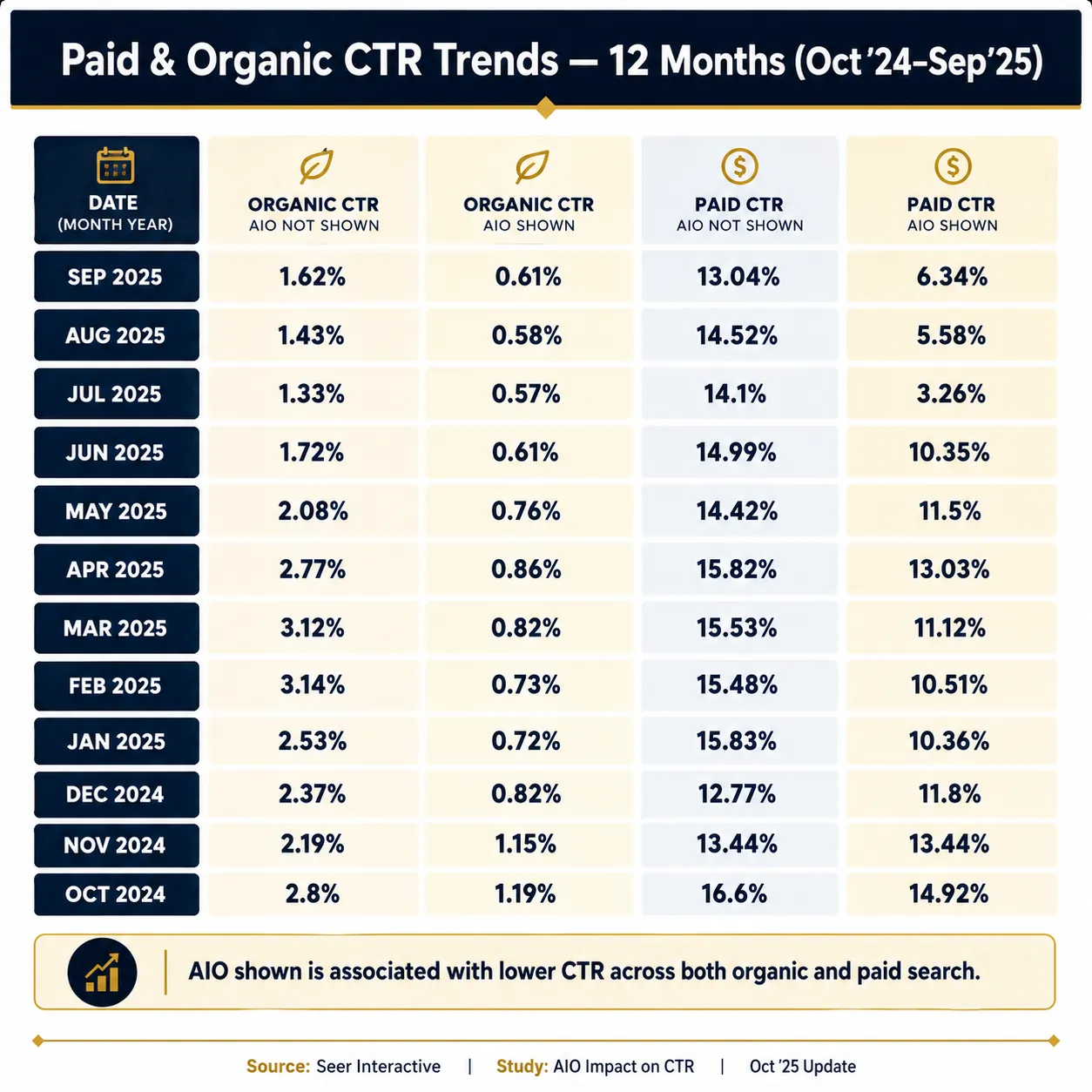
Google AI Overviews appear to be having a much larger impact on organic traffic.
Research highlighted by Search Engine Land has shown lower click-through rates when AI Overviews appear because users can get more information without leaving Google.
Google is also introducing AI-powered local results, which could have an even bigger impact on local businesses.
AI Local Results Show Fewer Businesses
Google has been testing AI-powered local packs on mobile in the U.S.
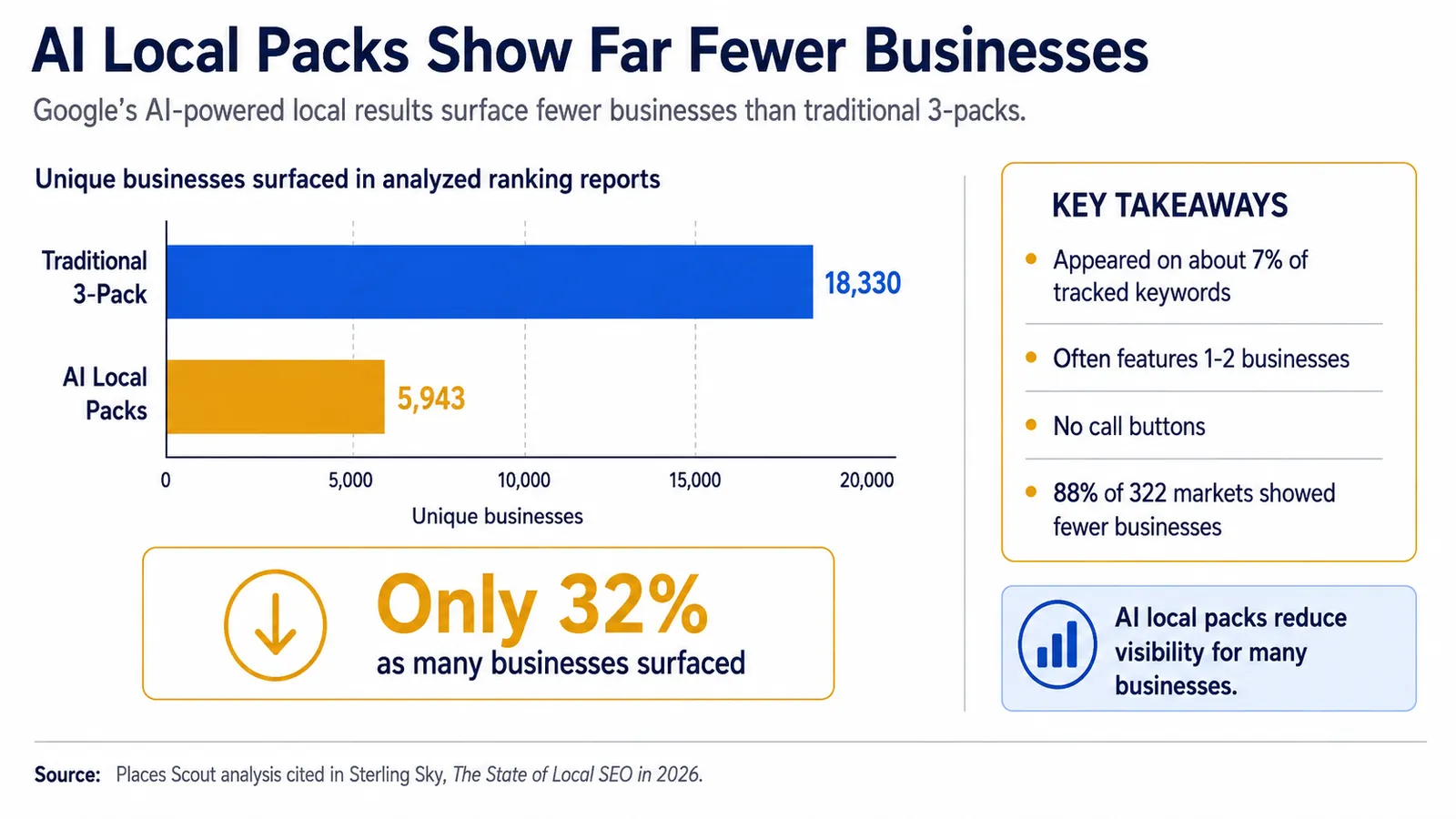
In our Places Scout tracking, these AI local packs appeared for roughly 7% of tracked keywords.
Compared with traditional local 3-packs, they create several problems:
- They often feature only one or two businesses instead of three.
- They may not include call buttons.
- They can feature completely different businesses from the traditional 3-pack.
When Places Scout analyzed our ranking reports:
- AI local packs displayed 5,943 unique businesses.
- Traditional 3-packs displayed 18,330 unique businesses.
- AI local packs surfaced only about 32% as many businesses.
- 88% of the 322 analyzed markets showed fewer businesses in AI local results.
The result is simple: fewer businesses receive visibility when AI-powered local results appear.
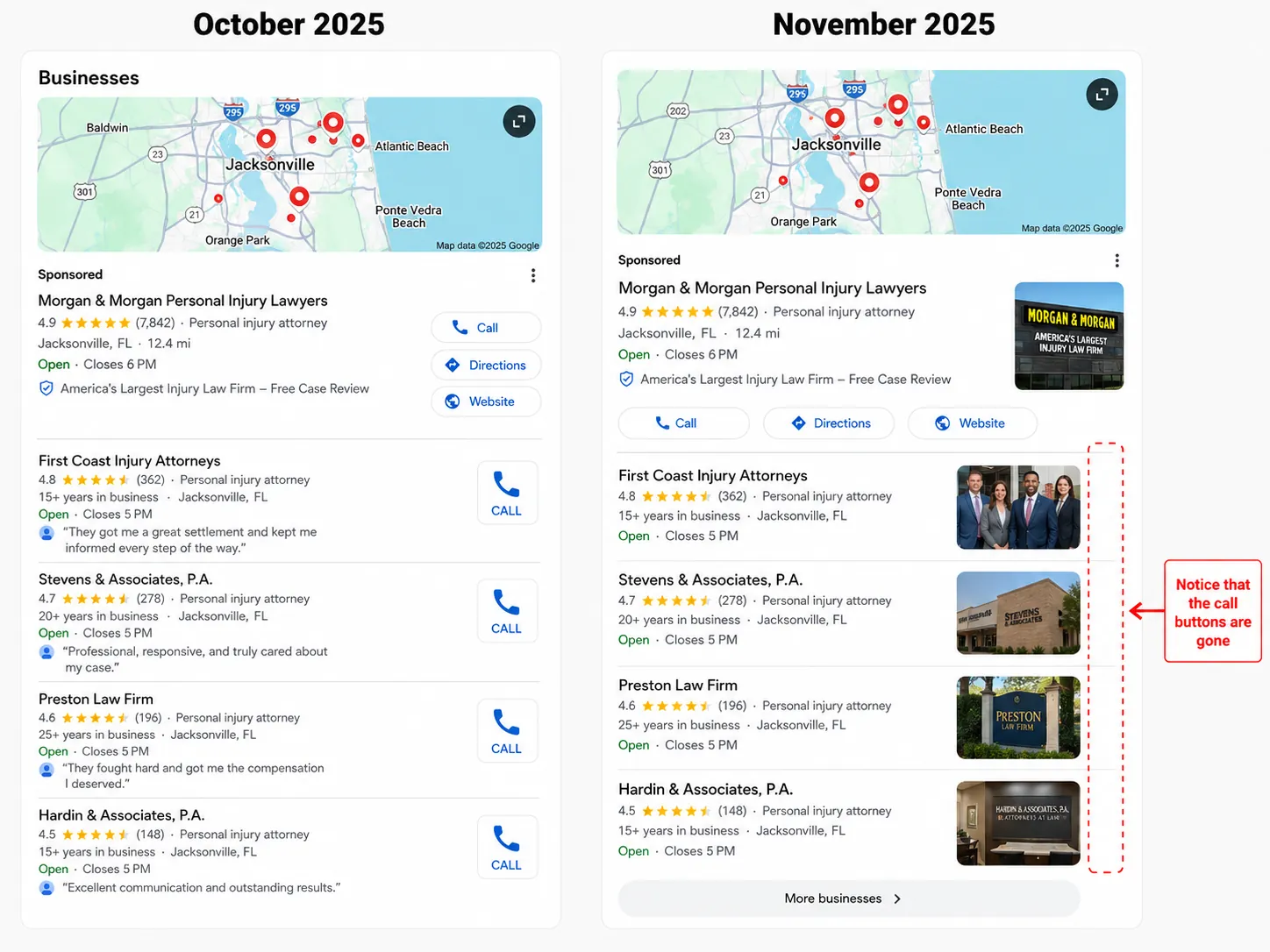
Google Is Removing More Call Buttons
Another factor affecting local leads is the changing design of Google’s mobile search results.
For several industries, Google has replaced prominent call buttons with images or other interface elements. Similar changes previously appeared in the dental industry and were followed by a noticeable decline in click-to-call activity.
You can see more background on that shift in this Sterling Sky analysis.
For businesses that depend heavily on phone leads, even a small interface change can have a large effect on conversions.
Local Pack Ads Are Growing Fast
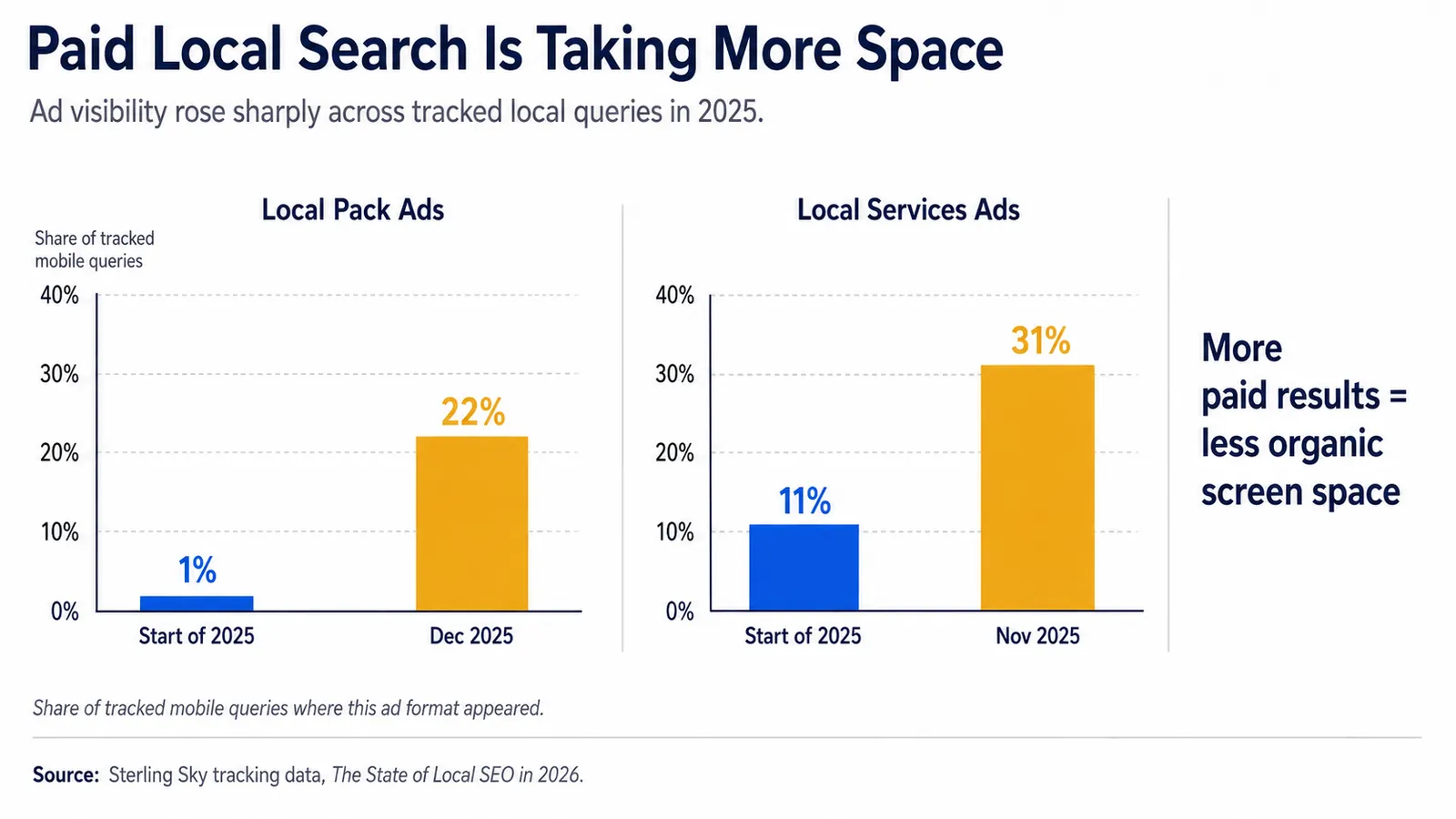
Paid placements inside local search results increased sharply during 2025.
At the beginning of the year, local pack ads appeared in roughly 1% of the mobile ranking reports we tracked. By December 2025, they appeared in almost 22%.
Businesses are now competing with paid listings in places that were previously dominated by organic results.
Local Services Ads Are Taking More Space
Local Services Ads are following the same pattern.
At the beginning of 2025, LSAs appeared in roughly 11% of the queries we tracked. By November, that number had increased to approximately 31%.
More paid inventory means less screen space for traditional organic local results.
What Businesses Should Do in 2026
Local SEO still matters, but relying entirely on rankings and Google Business Profiles is becoming riskier.
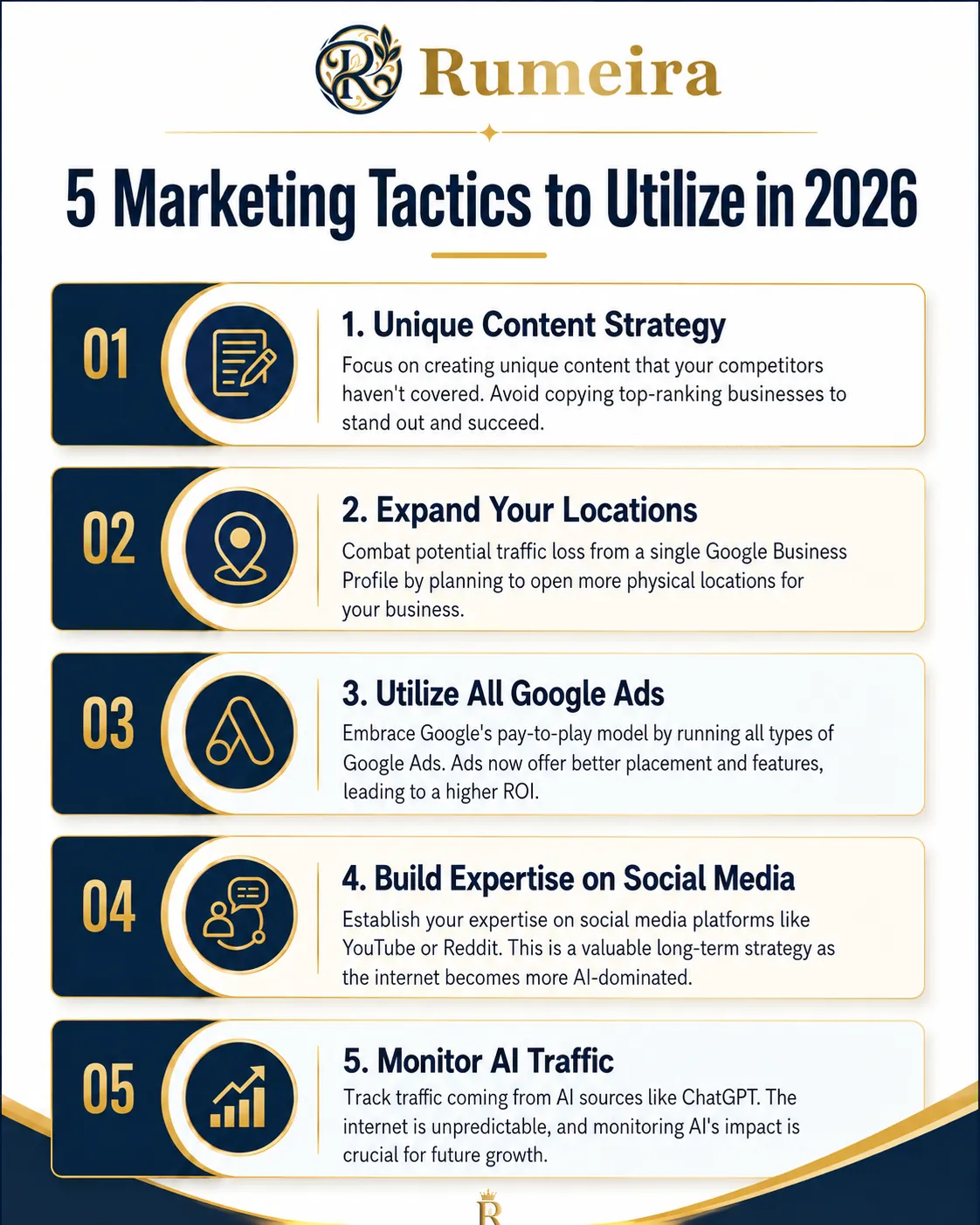
Here’s where businesses should focus.
-
Create Content Competitors Don’t Have
Stop rewriting the same articles already ranking on Google.
Publish original experiences, proprietary data, case studies, expert opinions, local insights, customer questions, and information that AI cannot easily reproduce from thousands of existing websites.
-
Expand Into More Locations
A single Google Business Profile may generate fewer impressions, calls, and leads as Google reduces organic visibility.
Businesses capable of legitimately opening additional locations can increase their total geographic search footprint rather than depending on one listing.
-
Use Multiple Types of Google Ads
Google local search is increasingly pay-to-play.
Search Ads, Local Services Ads, Maps placements, and other paid formats are receiving stronger placement while organic listings lose features such as call buttons.
-
Build Authority on Social Platforms
Informational content does not need to live exclusively on your website.
YouTube, Reddit, short-form video, and other platforms give experts another way to build visibility, credibility, branded searches, and audiences outside Google.
-
Track AI Visibility and Referrals
AI platforms may still represent a small percentage of local business traffic today, but that could change quickly.
Track referrals from ChatGPT and other AI platforms so you can see whether AI discovery is becoming a meaningful source of leads. Seer Interactive also provides a Looker Studio tracking template for comparing search, social, and AI traffic.
Local SEO Isn’t Dead. It’s Becoming a Bigger Marketing Ecosystem.
Ranking in Google Maps is no longer enough by itself.
The businesses that perform well in 2026 will combine local SEO with original content, paid search, social visibility, multiple discovery channels, and growing visibility inside AI platforms.
Local SEO is still valuable. It just can’t operate alone anymore.